
MAIN ROCKS USED IN THE CONSTRUCTION OF THE PALACE:
In the Palace of the Marquis of Santa Cruz, the following materials were used for its construction: marble (imported from Italy) in courtyards and noble areas, local limestone or sandstone in structural stonework, brick and river stone in walls, and slate in the staircase and floors.
The river stone (quartzite) and brick used in the construction were quarried locally in the municipality of El Viso del Marqués. The marble, on the other hand, is of Italian origin, reflecting the Italian Renaissance influence on the palace’s decoration. This choice of materials underscores the Renaissance character of the building, blending local and imported elements to create a unique architectural work.
Marble: Used in the most prestigious areas of the palace, such as the central courtyard, which features marble arcades with Doric and Ionic orders, and in the interior fireplaces. Italian origin.
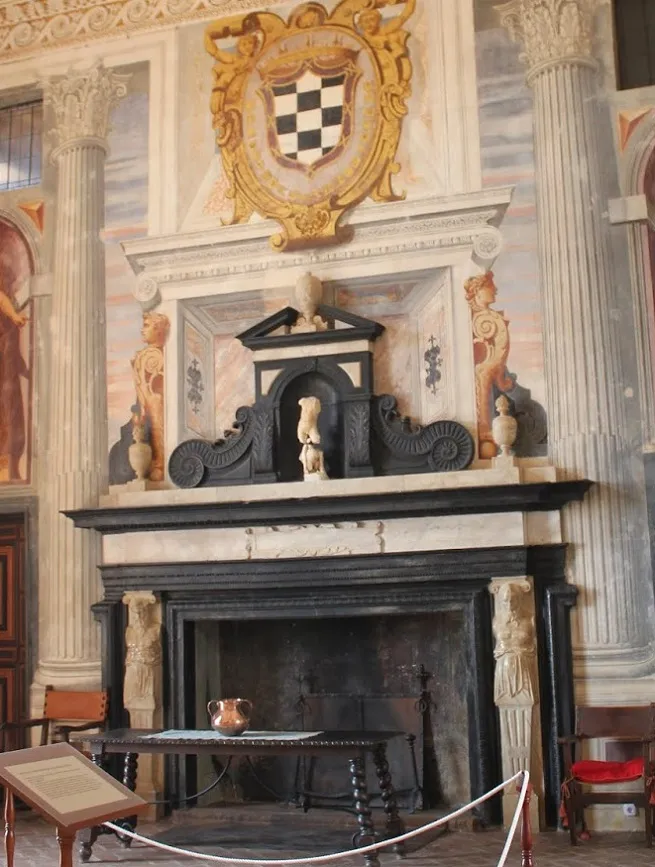
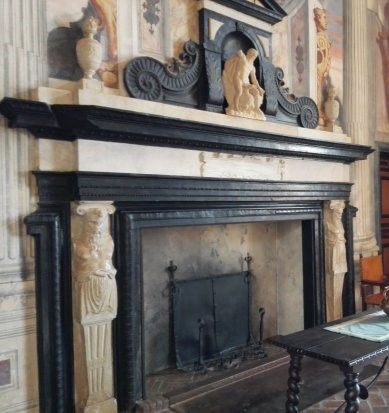
Stonework: Used in the corners and prominent structural elements, such as the courtyard pilasters and the stair columns. Hewn stone: This is stone that has been cut and shaped with tools to create regular forms (such as rectangular blocks), allowing for its precise placement in construction. In the case of the Palace of the Marquis of Santa Cruz, hewn stone was used for important structural and decorative elements, such as the pilasters, columns, and moldings, lending solidity and elegance to the building.
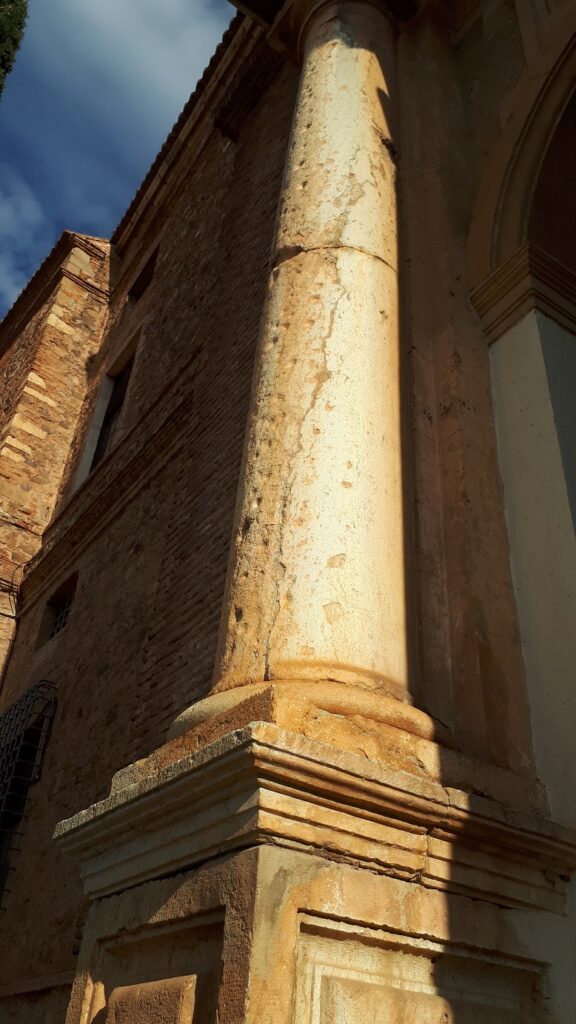
In Viso del Marqués, the historical quarries were located primarily near the town, taking advantage of the predominant geological formations in the region. According to the geological map of Ciudad Real, the area presents a combination of hydrothermal deposits and calcareous crusts, suggesting the presence of calcareous formations suitable for quarrying (urban limestone).
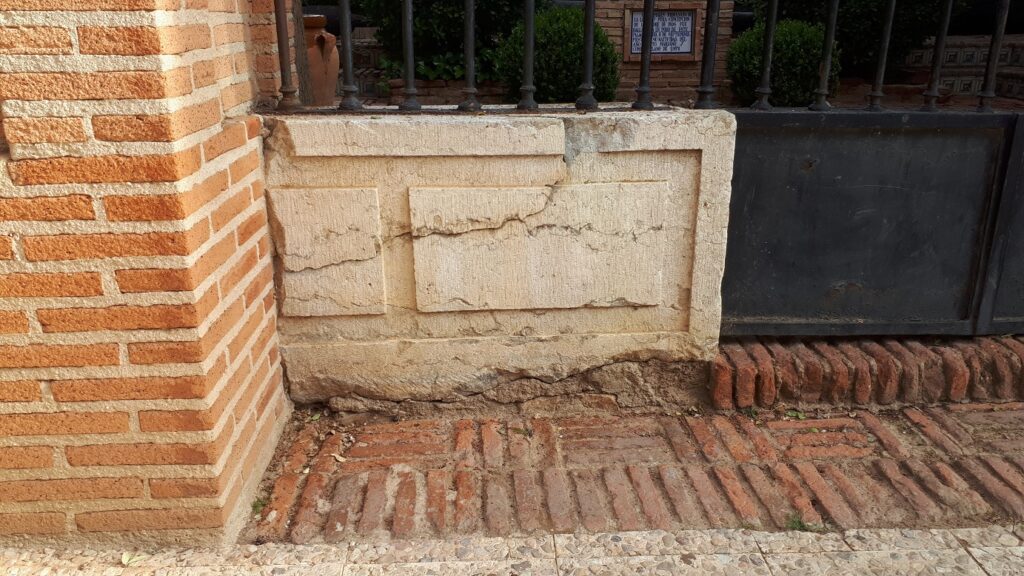
Urbana Limestone. Kralodvorian/Lower Ashgill. At the top of the Mixed Benches appears a very discontinuous section of carbonate rocks, with an average thickness between 5 and 20 m, known as Urbana Limestone (HENKE, 1926), the only truly calcareous unit of the Ordovician in the Central Iberian Zone. Its name is taken from the mining terminology of Los Guindos (Jaén), where it was crossed by the Urbana shaft.
Although specific information about the exact quarries used in the construction of the Palace of the Marquis of Santa Cruz is unavailable, it is likely that local stones, such as limestone, which are common in the region and suitable for carving and construction, were used. Furthermore, it is known that resources such as quartz have been mined in the area.
In short, it is reasonable to assume that the stones used in the palace’s stonework came from local quarries, taking advantage of the geological resources available in Viso del Marqués and its surroundings.
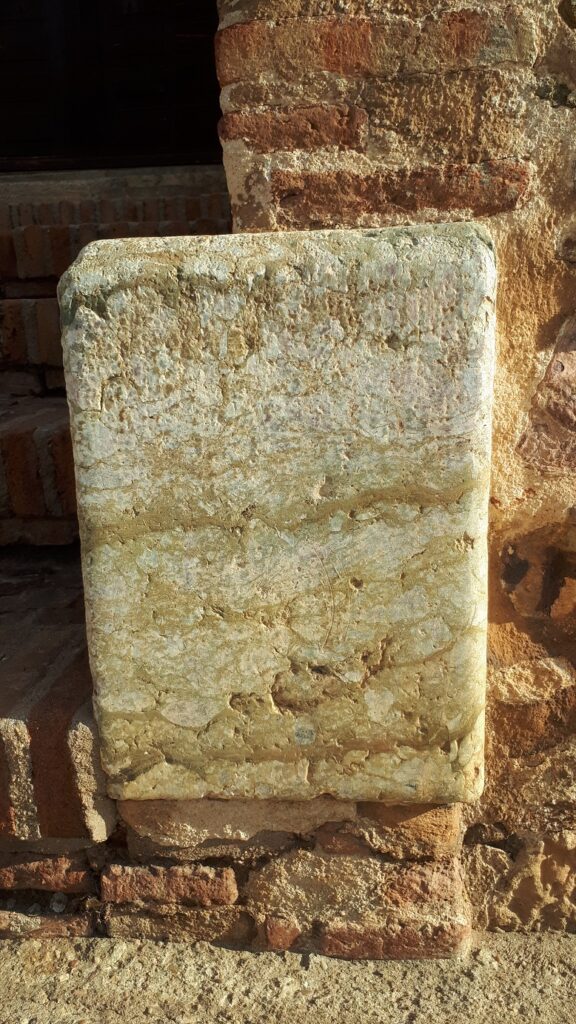
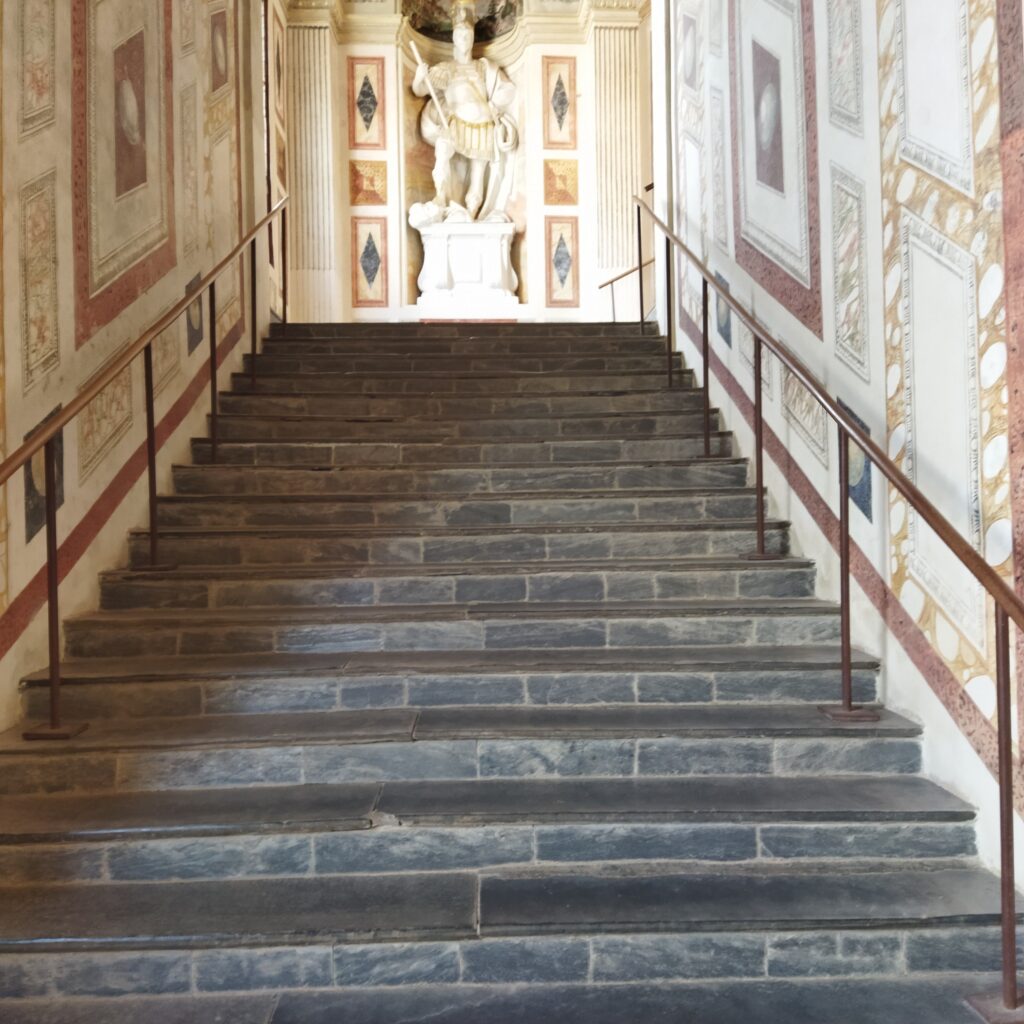
Slate: Given that Viso del Marqués is located in the province of Ciudad Real, in Castilla-La Mancha, it is possible that the slate used in the construction of the Palace of the Marquis of Santa Cruz was imported from producing regions such as Valdeorras (Ourense), due to the quality and reputation of the slate from that area. However, without specific information from historical sources of the period, this remains a reasonable assumption.
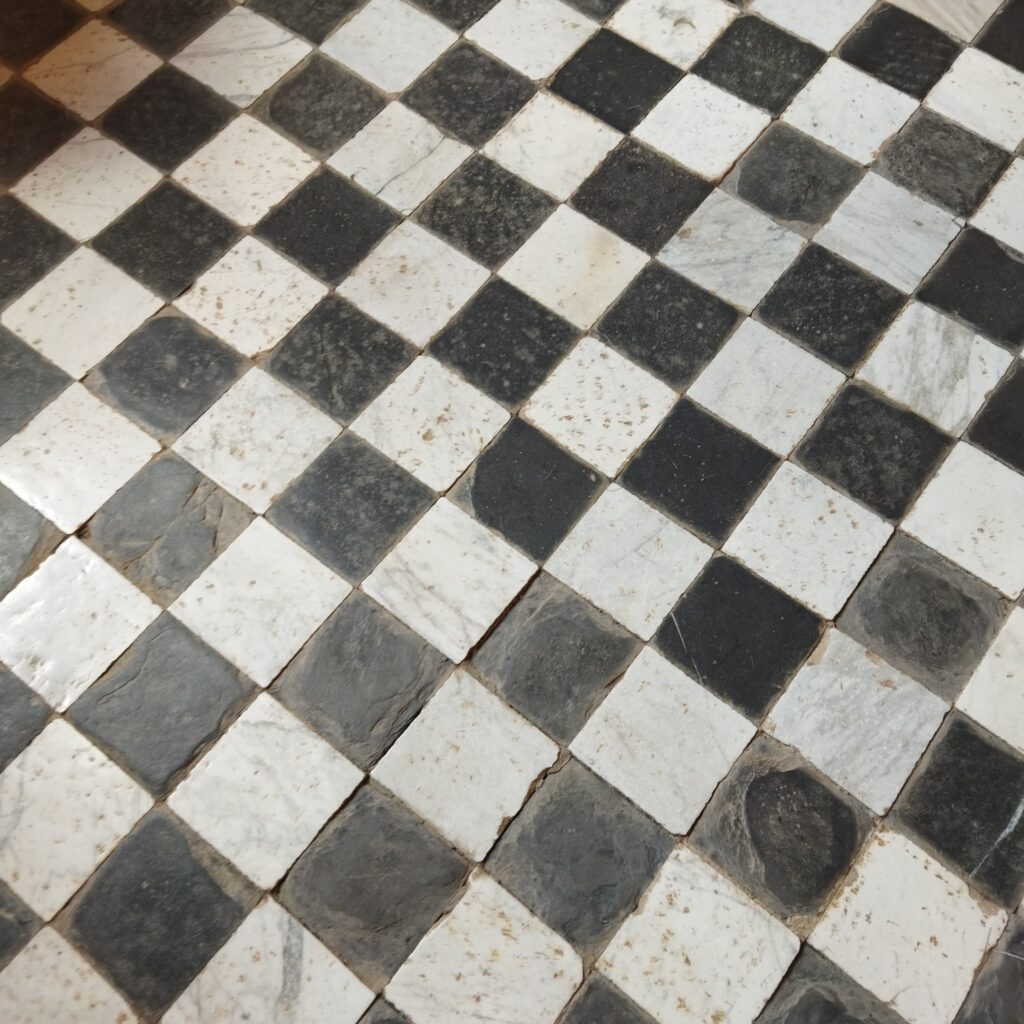
Obsidian: This volcanic igneous rock forms from the rapid cooling of silica-rich lava, and its presence is associated with active or recent volcanic areas. On the Iberian Peninsula, the best-known deposits are found in areas such as the Canary Islands, the Balearic Islands, and some parts of the Basque Country, but not in the province of Ciudad Real. Therefore, it is unlikely that the obsidian was mined locally in Viso del Marqués. If obsidian has been found in the area, it was probably imported from regions with known deposits, such as those mentioned above.
However, in the province of Ciudad Real, there is a volcanic region known as the Campo de Calatrava, which encompasses areas such as Ciudad Real, Almagro, Bolaños, and Daimiel. This area is one of the most important on the Iberian Peninsula in terms of recent volcanism, with activity occurring between 8.7 and 1.75 million years ago during the Pliocene and Quaternary periods. The Campo de Calatrava region encompasses approximately 240 distinct volcanic formations, making it one of the three most significant areas of recent volcanism on the peninsula. In this region, basalt is a volcanic rock commonly used in construction. Although Viso del Marqués is not located directly within the Campo de Calatrava, it is possible that basalt from this nearby volcanic region was used in the past for paving or architectural elements. Viso del Marqués’ proximity to the Campo de Calatrava facilitates the transport of materials from the area’s volcanic quarries. Thus, although no basalt quarries have been identified in Viso del Marqués, its proximity to the Campo de Calatrava suggests that basalt from this volcanic region may have been used in local construction, taking advantage of its durability and technical properties.
SUMMARY
Sedimentary Rocks
- Limestone: Widely used due to its ease of carving and good resistance. Of the “urban limestone” type, it is found in columns, corner blocks, and various decorative elements.
Igneous Rocks
- Basalt: Also very resistant, although darker. Less used for fine details due to its hardness. We found it in the square and surrounding area of the church.
- Obsidian: black volcanic glass. We also found it in the square.
Metamorphic Rocks
- Slate: Used mainly for roofing or paving; it is easy to divide into sheets
- Marble: Highly appreciated for its beauty and polishability. It is used in staircases, statues, decorative columns and cladding, balusters, and handrails. In the Palace, it is used for details in the fireplaces of the Hall of Honor.