
1. THE PALACE THAT TRANSFORMED AN ENTIRE VILLAGE
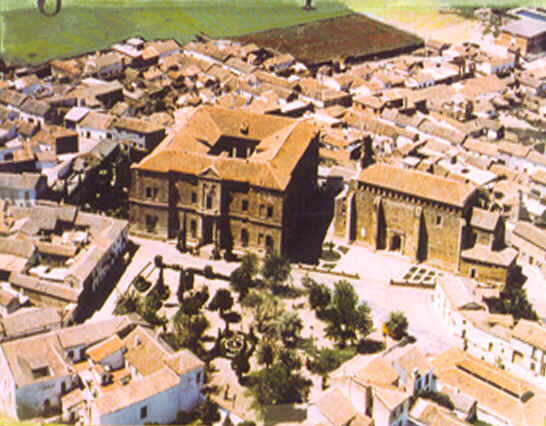
The construction of the Palace of the Marquis of Santa Cruz marked an absolute turning point in the history of Viso del Marqués. Before its arrival, the town was a rural settlement of little significance within the territory of Castile. However, from 1564 onwards, when Álvaro de Bazán ordered the construction of his grand palatial residence, the place changed in historical scal
For more than two decades, the area around the palace became a true center of construction and economic activity. Hundreds of specialized workers — stonemasons, carpenters, bricklayers, blacksmiths, painters, plasterers, and transporters — arrived at Viso from different parts of Spain and Italy. This concentration of skilled labor was exceptional for a rural setting in the 16th century.
The impact was not only economic. The arrival of Italian architects and artists introduced new ways of building, decorating, and organizing space, completely unfamiliar to the local tradition. The result was a temporarily internationalized village, connected with the artistic currents of the European Renaissance. The palace also generated indirect growth for the town: roads were widened, housing for workers was built, basic services were strengthened, and local trade in food and materials was boosted. In practice, the building functioned as a development engine that redefined the social and economic structure of the area. In the long term, the palace not only left a monument but also a historical identity of its own for the municipality. (Activity carried out in the subject of Biology, Geology, and Environmental Sciences – 25/26)
2.- THE POWER OF THE SEA IN THE MIDDLE OF LA MANCHA.
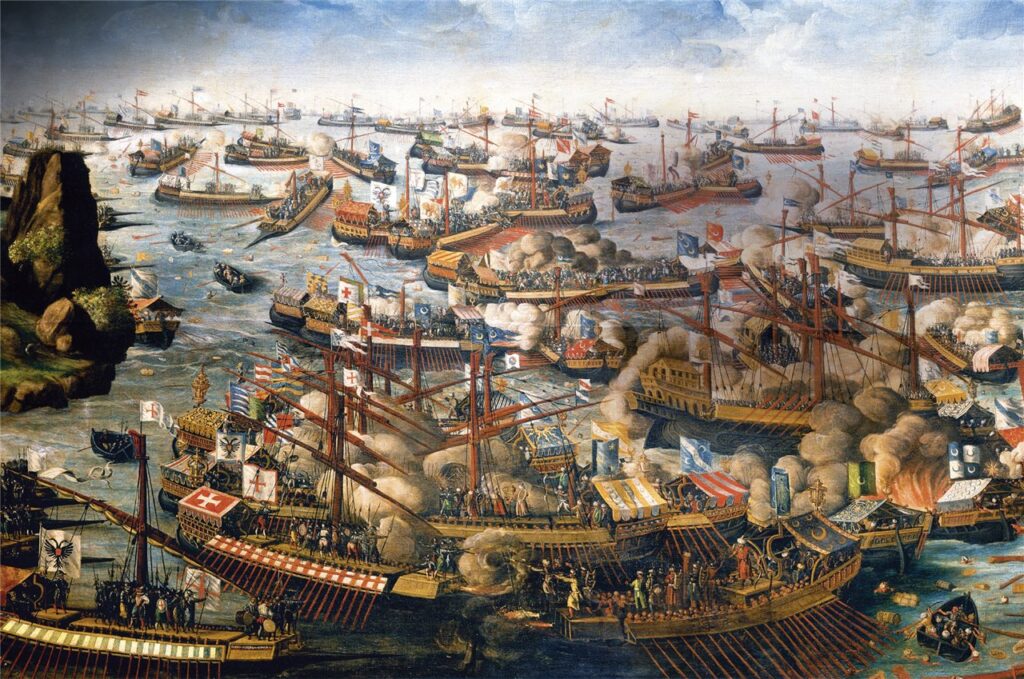
The Palacio del Viso cannot be understood without considering its founder, Álvaro de Bazán, one of the great admirals of the 16th century and a key figure in the naval supremacy of the Spanish Monarchy under Philip II.
Bazán played a leading role in decisive conflicts in the Mediterranean and Atlantic, and his military prestige directly influenced the symbolic character of the palace. Although located inland on the Iberian Peninsula, the building is deeply linked to the sea, navigation, and Spanish naval power.
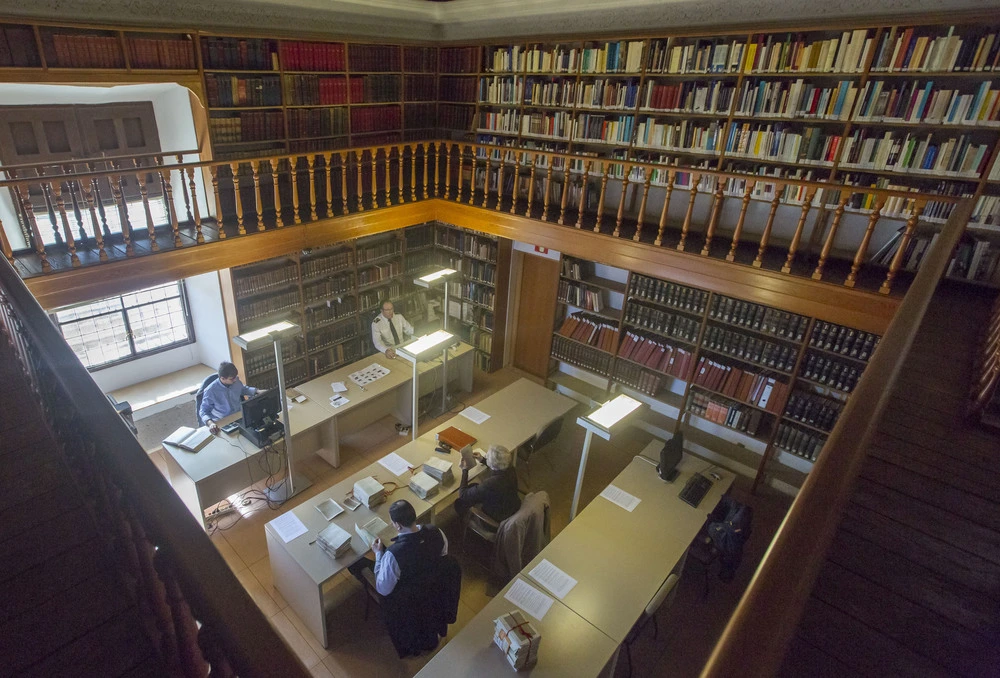
This historical connection was definitively consolidated in the 20th century when the palace was chosen as the headquarters of the Álvaro de Bazán General Naval Archive. This institution houses one of the world’s most important collections of documents on Spanish maritime history.
Its archives contain navigation logs, shipbuilding plans, transoceanic expedition records, naval battle records, and administrative documents of the Navy dating back to the 16th century. This makes the palace an international center of reference for the study of maritime history.
Thus, a building born as a noble residence has ended up becoming a guardian of Spain’s naval memory, uniting land and sea in the same historical space.
3. A UNIQUE ITALIAN RENAISSANCE PALACE IN CASTILLA-LA MANCHA
The Palace of El Viso is one of the most unique jewels of the Spanish Renaissance due to its strong Italian influence, something extremely unusual in the architectural context of Castile-La Mancha.
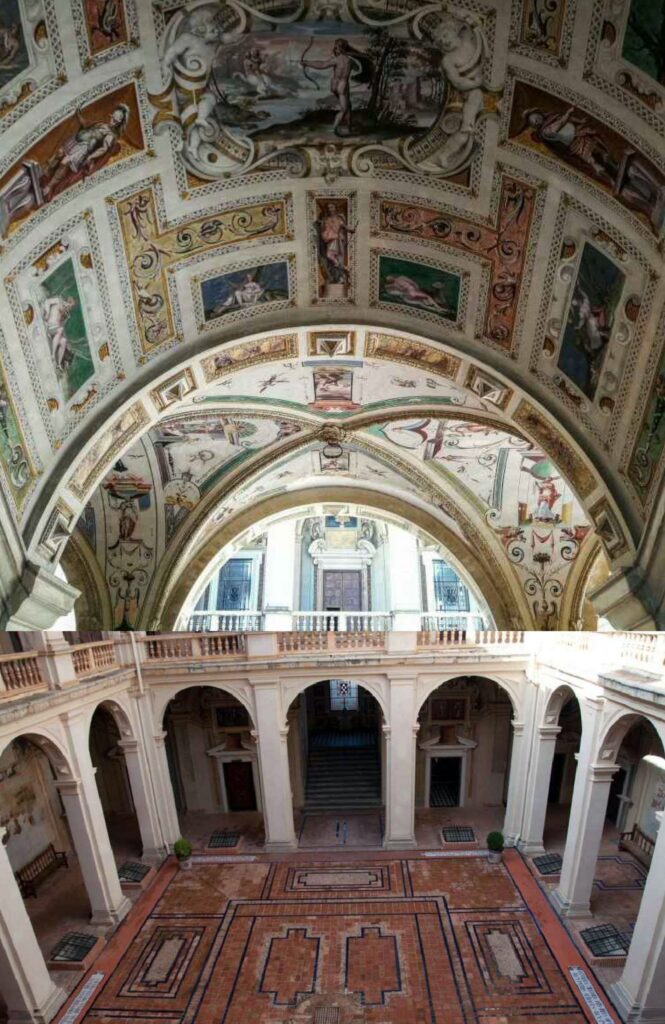
Its interior was conceived as a space to represent the power and culture of the Hispanic Monarchy. To this end, Álvaro de Bazán commissioned the decoration from Italian artists specializing in mural painting and complex iconographic programs.
The palace rooms are covered with frescoes that combine mythological scenes, allegories of power, naval references, and symbols of the Bazán family’s military glory. Each room was designed as a visual narrative intended to convey prestige, humanist culture, and political authority.
The artistic quality of these frescoes is exceptional, not only for their state of preservation but also for their iconographic coherence. Visitors encounter a collection that reflects the Renaissance ideal of the union of art, power, and knowledge.
This heritage makes the palace a unique case: a perfectly preserved Italian Renaissance building in its original location in the heart of Spain.
4. FROM NOBLE RESIDENCE TO NATIONAL ARCHIVE: THE SURVIVAL OF THE PALACE.
The Palacio del Viso is one of the most unique jewels of the Spanish Renaissance due to its strong Italian influence, something extremely unusual in the architectural context of Castilla-La Mancha.
Throughout its history, the Palacio del Viso has undergone a complex evolution marked by splendor, partial abandonment, and institutional restoration.
After its period of greatest splendor in the 16th century and its gradual decline as a noble residence in subsequent centuries, the building entered a phase of decline during the 19th century, coinciding with the disappearance of the manorial system and the transformations of the liberal state.
During this period, the palace lost its original function and suffered progressive deterioration, aggravated by a lack of maintenance and the indirect effects of conflicts such as the War of Independence and the political upheavals of the 19th century.
The Spanish Civil War posed a new risk to its preservation, as it did to numerous historic buildings in the country. However, its solid construction prevented its destruction.
The real turning point came in 1948, when the State decided to house the Álvaro de Bazán General Archive of the Navy in the building. This decision completely changed its destiny: the palace was restored, renovated, and adapted to house historical documents of the Spanish Navy.
Since then, the building has been the subject of continuous conservation work, becoming an example of successful heritage restoration. Today, it is not only preserved as a historical monument, but also continues to play an active role within the State’s cultural and documentary system.
5. THE PALACE IN THE TIMES OF CRISIS: WARS, POLITICAL CHANGES AND SURVIVAL.
The history of the Palacio del Viso has not been linear. Over the centuries, it has gone through periods of political instability and conflicts that directly affected its conservation.
During the War of Independence (1808–1814), the territory of Castilla-La Mancha suffered the passage of troops, requisitions and episodes of generalized insecurity. Although the palace was not destroyed, it did experience a period of vulnerability and irregular use, as occurred with many noble properties of the time.
In the 19th century, with the consolidation of the liberal State and the disappearance of the manors, the building lost its administrative and economic function. This caused a progressive abandonment that affected both its maintenance and its social use.
During the 20th century, the Civil War once again placed the historical heritage in a critical situation. Many similar buildings were destroyed or reused without control, but the palace managed to survive thanks to its architectural robustness and its recognized historical value.
Its subsequent recovery under Franco allowed this trend to be reversed and ensure its survival to the present day.
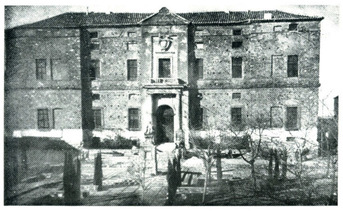
6. THE PALACE TODAY: A LIVELY SPACE FILLED WITH HISTORY, RESEARCH AND CULTURE.
Today, the Palacio del Viso is not only a historical monument but also a vibrant center for knowledge and cultural dissemination.
As the headquarters of the Álvaro de Bazán General Naval Archive, the building plays a vital role in preserving Spain’s naval heritage. Researchers, historians, and specialists from around the world access its documentary holdings to study centuries of maritime history.
Furthermore, the palace has become a space for cultural outreach through guided tours, temporary exhibitions, and educational activities. These initiatives allow the general public to appreciate both its architectural value and its historical significance.
The building now represents a model of balance between heritage conservation and active use, demonstrating that great historical monuments can remain useful without losing their identity.
For Viso del Marqués, the palace is also a cultural engine and a symbol of identity, connecting the town’s present with its imperial past.