First-year high school economics students have become marketing experts and explored the 4Ps using the Palace of the Marquis of Santa Cruz as a case study, discovering how an architectural gem can also be analyzed as a cultural product with enormous strategic potential.
The Marketing Mix: The Project’s Compass
To carry out this project, the students used the Marketing Mix model, a set of strategic tools that a company uses to effectively market a product or service. This model is based on the well-known 4Ps:
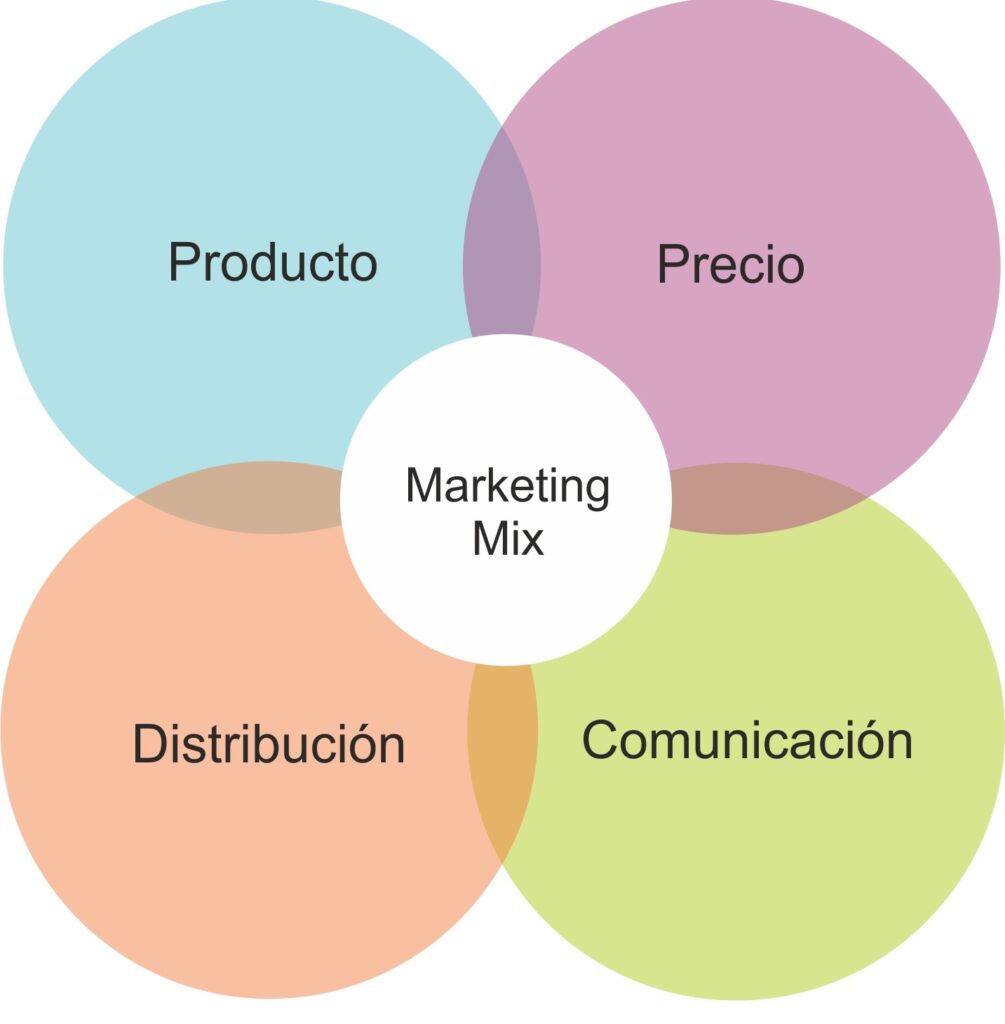
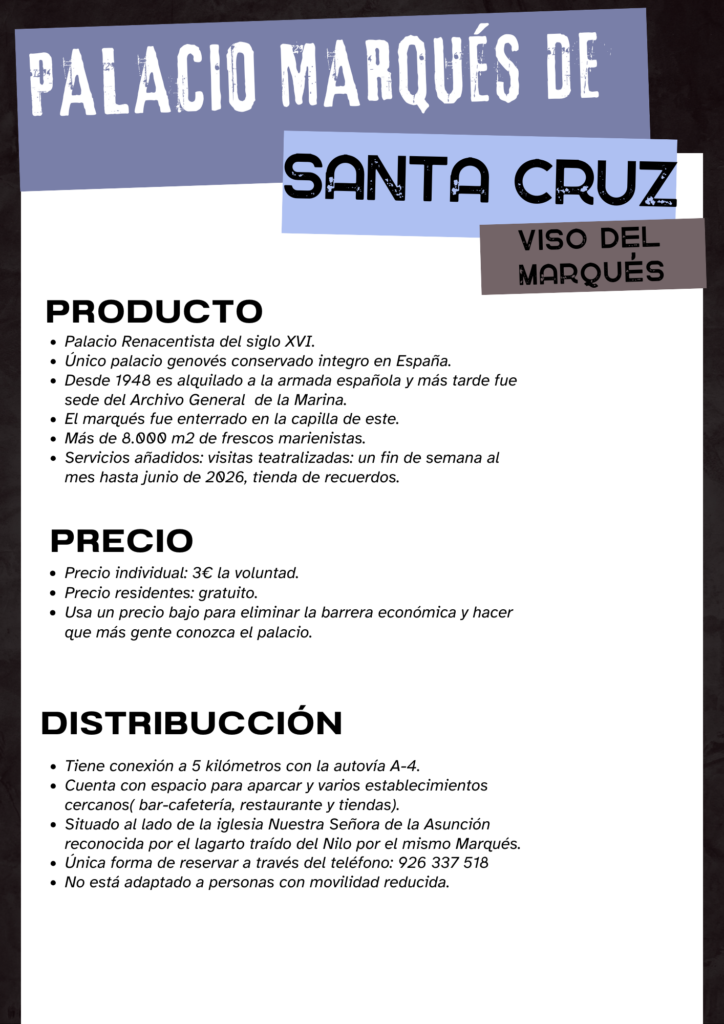
- Product. This “P” refers to the product being sold, whether a physical product or a service, in this case, the Palace. Its strengths have been analyzed, such as the impressive Genoese frescoes, its unique Renaissance architecture in Spain, and its history linked to the Navy.
- Price. The second “P” refers to the price; that is, the amount of money you must charge for your product to make a profit. Therefore, a study has been conducted on ticket prices, the existence of group discounts, and the value for money compared to other tourist destinations in the region or country.
- Place. The third “P” refers to how the product reaches the end consumer at the right place and time. This section analyzes how the product reaches the visitor, considering physical access to the town of Viso del Marqués and how to purchase tickets to visit the palace.
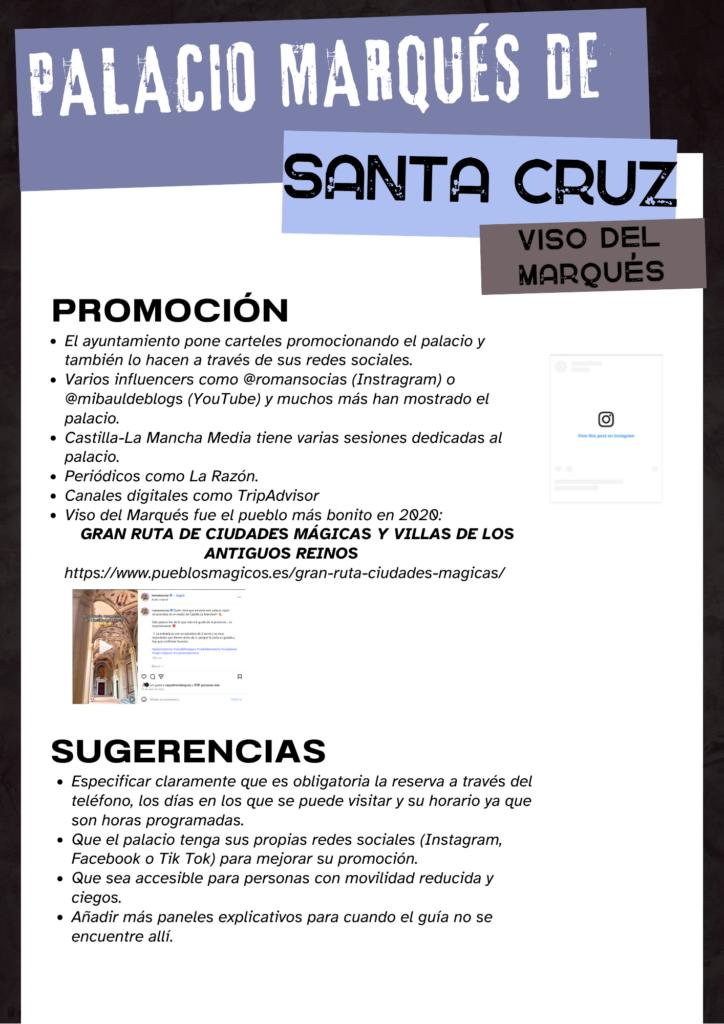
- Promotion. The fourth “P” focuses on the communication strategies being implemented to promote our product, generate interest, and encourage purchases. In this section, the communication strategies employed by the Palace were analyzed, and it was here that the students identified the greatest opportunity for innovation.
Following this analysis, the students created posters that visually present all the information gathered and also propose some improvements for the Palace. These are shown below: